The Flower Sprite’s Rule for Granting Wishes
The Adventures of Maya the BeeThe Flower Sprite’s Rule for Granting Wishes makes a sprite’s brief life and its power to grant a wish parts of the same choice: a sprite must remain in its birth flower to live, but can leave it to bring happiness to the first creature it encounters by fulfilling that creature’s dearest wish. In Maya’s case, the rule converts a meeting on a midsummer night into a promise, and the sprite’s departure from the flower into the beginning of her journey toward the human world.
Eligibility and Conditions
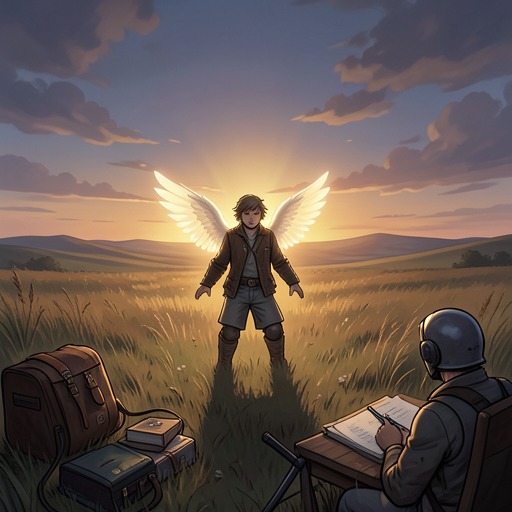
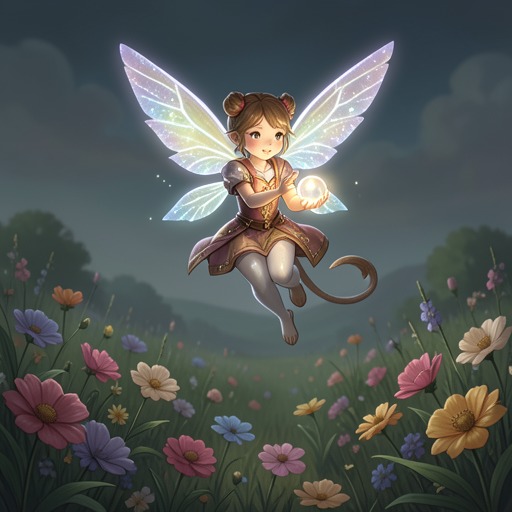
The rule rests on two linked conditions. Flower Sprites live for seven nights and must stay in the flowers in which they are born; if they leave, they die at dawn. Departure is therefore not an ordinary excursion but a step with a fatal consequence. The text presents this limit plainly when the sprite explains it to Maya. Her immediate alarm, and her insistence that he hurry back into his flower, make clear that the risk is real to her even before she understands what the sprite’s departure means. The wish-granting power has its own precise limits. Before dying, a sprite can fulfill the dearest wish of the first creature it meets. The power does not apply indiscriminately to anyone who asks: it depends on the order of encounter, and the first creature’s most deeply held wish defines what can be granted. The sprite further explains that the wings of a Flower Sprite grow when it seriously decides to leave its flower for the purpose of making someone happy. The rule thus connects the ability to grant a wish not merely to meeting a creature, but to an intentional choice to benefit that creature despite the cost.
The Choice to Leave
When the sprite tells Maya about this power, she admires the possibility of fulfilling another being’s wish and says that she would leave a flower for the same reason. She does not realize that she is the first creature the sprite has met on his flight from the flower. The dramatic irony is central to the rule’s operation: Maya speaks about the general beauty of selfless wish-granting while standing, unknowingly, in the exact position that makes the sprite’s power available to her. The sprite then makes the connection explicit by asking whether Maya has a wish, reminding her that she is the first creature he has met and that he can grant her dearest one. Maya is hesitant rather than eager to claim the gift. She protests that she is only a bee and says she does not deserve such goodness. His answer rejects deservingness as a condition: good and beautiful things, he tells her, come like sunshine. The rule therefore does not require Maya to earn the power through merit; its decisive conditions are the sprite’s encounter with her and his own willing choice.
Maya’s Wish and Its Consequence
Maya’s wish is to know human beings at their best and most beautiful. She speaks quickly and intensely, afraid that such a great wish might be refused. The sprite answers by taking her trembling hand and agreeing that it will be granted, then invites her to fly with him. Their departure together on a bright Midsummer Night over the meadow gives the rule an immediate consequence: it does not remain an explanation of magical possibility, but moves Maya into the experience she has asked for. The wish is significant in part because it concerns understanding rather than possession. Maya asks for the chance to know humanity in its finest aspect, and the sprite’s power sends her toward that encounter. The rule supplies the cause of the journey while also establishing its cost: the sprite has left the flower from which he cannot return, and his life is nearing its end. His promise to Maya is thus inseparable from the short time remaining to him.
Death and Renewal
The sprite describes death as a passage rather than simple disappearance. Flower Sprites live to see dawn; when dew falls, they are drawn into fine veils above the grass and flowers. As the light rises, they become dewdrops, which plants drink. The sprites thereby become part of the plants’ growth and flowering, from which new sprites eventually arise. The account gives the rule a cycle beyond the individual sprite’s life: leaving the flower brings death to that sprite, but the sprite’s substance returns to the natural process that produces new life. This cycle does not cancel the personal cost of the choice. Maya reacts with terror and urges the sprite to return, while he sadly tells her it is too late. Yet when he acknowledges that he will die, he does so without sadness. The contrast gives the wish-granting law its emotional shape: the sprite’s power is not a reward detached from consequence, but an act of generosity exercised within a finite life. By making the wish possible through departure, the rule binds wonder to sacrifice and gives Maya’s new understanding of humanity a beginning grounded in another creature’s chosen kindness.